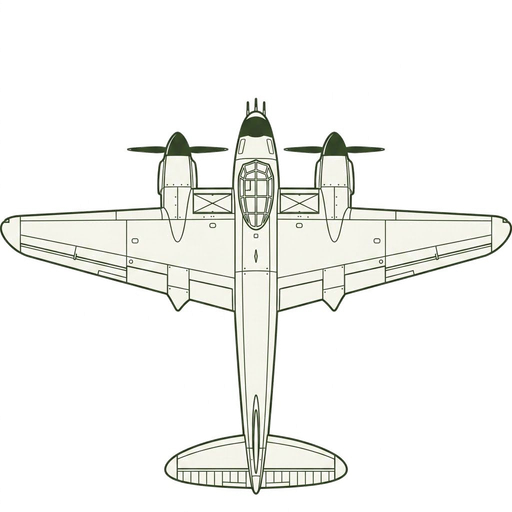
Operation Carthage overview
Almost everything that happened at Fersfield has an element of tragedy, and this mission is no different.
Why Copenhagen
By early 1945 the Danish resistance was close to collapse. The Gestapo
had made its headquarters in the Shellhus - the Shell Company
building in central Copenhagen - filling it with prisoners,
interrogation rooms, and the card indexes that mapped the entire
resistance network. Danish contacts pleaded with London for an air
strike: destroy the records, and give the prisoners held in the
building at least a chance [1][2].
The job went to the RAF’s Second Tactical Air Force and its de
Havilland Mosquitos - the only aircraft that could realistically thread the needle and put
a bomb into one specific building in the middle of an occupied city.
Published accounts name the three squadrons of No. 140 Wing - No. 21
Squadron RAF, No. 464 Squadron RAAF and No. 487 Squadron RNZAF - led
on the day by Group Captain R. N. Bateson, with Mustang fighters as
escort [2][3].
They staged through Fersfield. On the morning of 21 March 1945 the force lifted off from the Norfolk airfield and crossed the North Sea at wave-top height [1][2].
The raid
The Mosquitos came into Copenhagen at rooftop level and bombed in
waves. The Shellhus was hit and destroyed: Gestapo files burned, and
prisoners - including resistance leaders awaiting interrogation -
escaped from the wreckage of the upper floors [1][2].
The tragedy
One aircraft in the first wave clipped a lamp post on the run-in and crashed near the Institut Jeanne d’Arc, a Catholic school in Frederiksberg, about a mile and a half from the target. The fire from the crash was mistaken by some following crews for the marked target, and bombs fell on the school [2][3].
Danish accounts record that more than a hundred people died at the
school and in the surrounding streets - most of them children [2][3].
Sources differ on the exact toll. Published figures for the children killed at the school are 86 in some sources and 87 in others, with 18 adults - nuns, teachers and firefighters - also recorded among the dead [2][3].
In Denmark the raid is remembered as the one that broke
the Gestapo’s grip in the city and saved the resistance, but also as
one of the worst civilian tragedies in wartime Denmark. Memorials in
Copenhagen mark both. Any telling that keeps only the triumph, or only
the tragedy, is not the whole story.
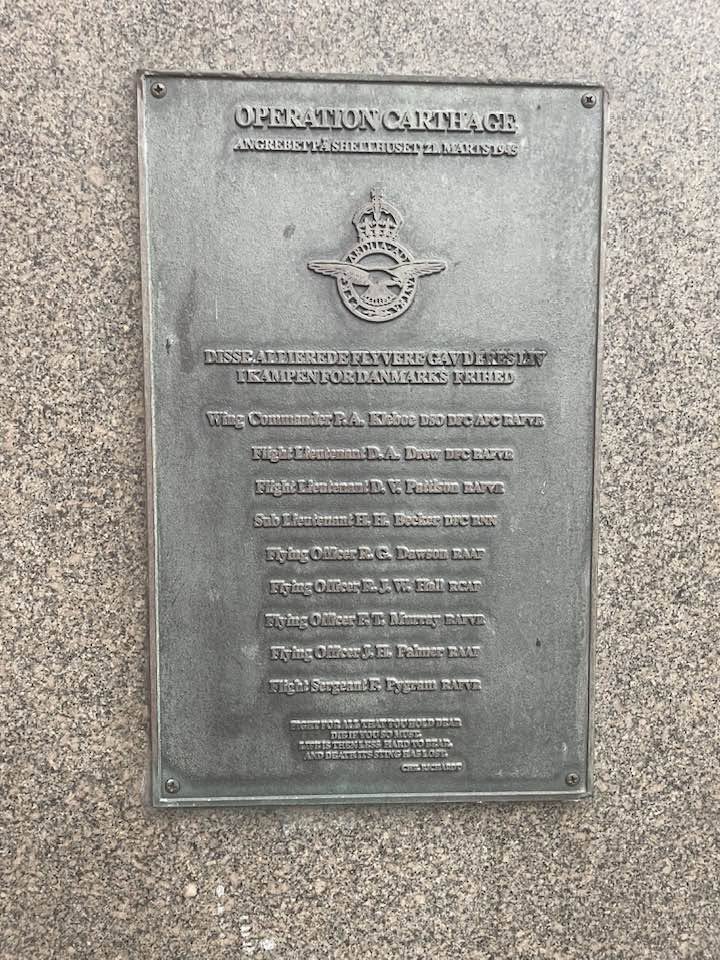
The RAF paid too: aircraft and crews were lost on the raid, recorded in
published accounts as four Mosquitos and two escort Mustangs, with nine
airmen killed as follows [2].
| Rank | First name(s) | Surname | Decorations / Service |
|---|---|---|---|
| Wing Commander | Peter Andrew | Kleboe | DSO, DFC, AFC, RAFVR |
| Flight Lieutenant | David Arthur | Drew | DFC, RAFVR |
| Flight Lieutenant | David Victor | Pattison | RAFVR |
| Sub Lieutenant | H. H. | Becker | DFC, Royal Norwegian service |
| Flying Officer | Ronald George | Dawson | RAAF |
| Flying Officer | Reginald John Ward | Hall | RCAF |
| Flying Officer | Fergus Thomas | Murray | RAFVR |
| Flying Officer | John Herbert | Palmer | RAAF |
| Flight Sergeant | Frank | Pygram | RAFVR |
A note on our sourcing
The core facts - the Shellhus as Gestapo headquarters, its destruction
on 21 March 1945 by Second Tactical Air Force Mosquitos, the staging
from Fersfield - are solidly established [1][2]. Details such as the
exact squadron roster, escort numbers and casualty breakdowns rest on
secondary accounts [2][3]; we’re planning to verify them against RAF operational
record books and Danish institutional sources (including the Museum of
Danish Resistance), and will refine this page as that work completes.
Please get in touch if you have any corrections to this page fersfieldairfieldhistory@gmail.com
Sources
- IWM collections - 'Operation Carthage: the attack on Shell House' (The Shellhus as Gestapo HQ; its destruction on 21 March 1945 by RAF Second Tactical Air Force Mosquitos)
- Wikipedia - Operation Carthage (Raid narrative: squadrons, low-level route from Fersfield, results, the Institut Jeanne d'Arc tragedy, casualty figures)
- The People's Mosquito - 'Operation Carthage: The Shell House Raid' (Detailed account: 140 Wing squadrons, Group Captain Bateson, the school tragedy)