Operation Aphrodite and Anvil overview
By mid-1944 the Allies had a problem that bombs kept failing to solve:
the V-weapon “heavy sites” in the Pas-de-Calais - enormous bunkers of
reinforced concrete, metres thick, built to launch V-1s, V-2s and the
V-3 supergun at London. The belief was that despite RAF and USAAF bombing, there remained a risk that Geman activity continued below the surface. So the
Americans reached for something desperate: if a bomb couldn’t crack the
concrete, perhaps a whole bomber could.
How it was supposed to work
Aphrodite (the Army Air Forces project) and Anvil (the US
Navy’s) took war-weary bombers, stripped them, and packed them with
Torpex - a high explosive half again as powerful as TNT. Sources give
the load as 20,000 to nearly 22,000 pounds: nine to ten tonnes of
explosive in one airframe [2][3].
A drone couldn’t take off by itself. So a volunteer crew of two flew
the aircraft up manually, armed the load, set the radio control - and
bailed out over England. From there a “mother ship” flying nearby
steered the drone on by remote control, watching through an early
television camera mounted in the drone’s nose that transmitted the
view back to the controllers [2]. In 1944, this was science fiction
made real: America’s first combat drones [3].
The Army’s converted B-17s were designated BQ-7; the Navy’s PB4Y-1 Liberators, BQ-8 [3]. A third Fersfield project, Batty, experimented with television-guided glide bombs [1].
The programme needed a launch site away from busy traffic - the first
choice, RAF Woodbridge, was rejected for the risk of collision with
damaged aircraft making emergency landings there - and so operations
settled on quiet, empty Fersfield in July 1944 [2], flown by a
detachment of the 388th Bomb Group’s 562nd Bomb Squadron from
Knettishall, alongside the Navy’s special air unit [7].
A warning about sources. Even reputable accounts stumble on the details here: the IWM’s American Air Museum page describes the Army drones as “veteran B-24 bombers” (the Army drones were B-17s; the B-24-family aircraft were the Navy’s PB4Y-1s) [7][3], and some official summaries misname Kennedy’s aircraft type. Where accounts conflict, we say so rather than pick silently.
The targets
The first targets were the V-weapon bunkers: Mimoyecques (the V-3 site), Siracourt, Watten and Wizernes [2][4]. Wikipedia’s account records later missions being redirected, after those sites were overrun, to targets including the U-boat pens at Heligoland and industrial sites in Germany [2].
The cost
The first Aphrodite mission was flown on 4 August 1944. On it, pilot 1st Lt John W. Fisher Jr. was killed when his drone crashed before he could bail out [6].
Eight days later, on 12 August 1944, the Navy flew its first Anvil
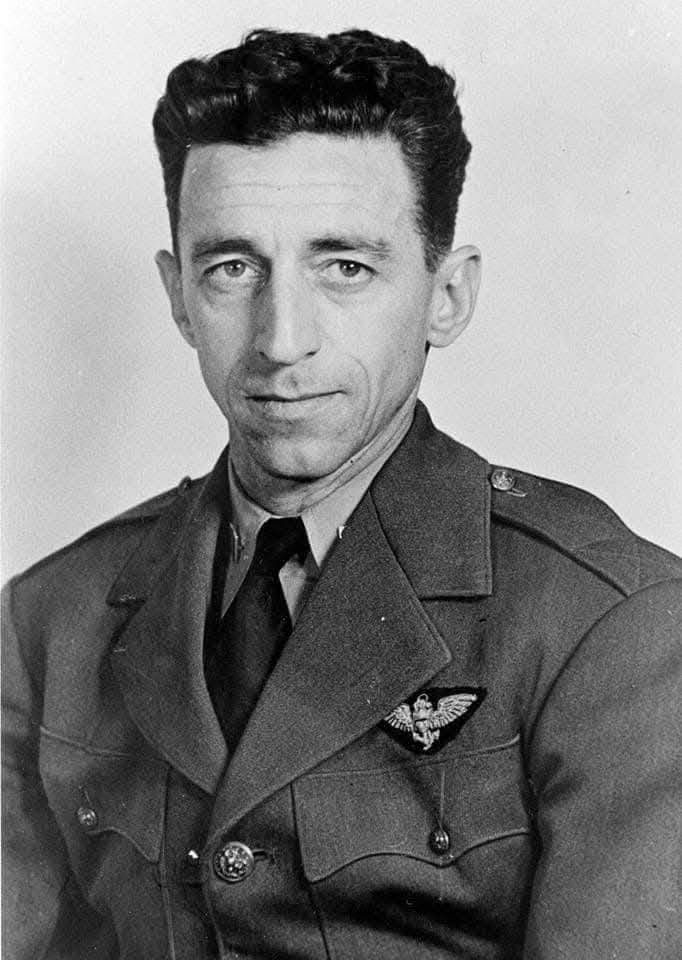
mission. At the controls of BQ-8 drone Zoot Suit Black were Lt
Joseph P. Kennedy Jr. - eldest son of the Kennedy family, elder
brother of the future President - and Lt Wilford J. Willy. Their
target was Mimoyecques. They took off from Fersfield, and before they
could bail out, the aircraft’s ten tonnes of Torpex detonated
prematurely in the air near New Delight Covert, Blythburgh, Suffolk. Both men were killed
instantly; the definitive cause differs depending on source. [3][4][5].
Joe Kennedy had already completed his combat tour. He volunteered for
Anvil anyway. His death moved the family’s political hopes onto his
younger brother John - a line you can draw from a field in Norfolk to
the White House [4].
Did it work?
No. For all its ingenuity and courage, no Aphrodite or Anvil drone destroyed its intended target [2]. Several crews were killed or injured in a programme that never achieved what it was invented for. The concrete the drones were built to break was eventually taken not from the air but by soldiers on the ground.
What the programme left behind is a different kind of legacy: the men
who climbed, on purpose, into bombers filled with ten tonnes of
explosive - and the strange distinction of quiet Fersfield as the
birthplace of the combat drone.
Sources
- IWM American Air Museum - Fersfield place record (Aphrodite/Batty/Anvil launched from Fersfield; Kennedy's death)
- Wikipedia - Operation Aphrodite (Programme mechanics: Torpex load, bail-out procedure, Double-Azon/Castor control, television guidance, choice of Fersfield, outcome)
- Smithsonian National Air and Space Museum - 'Remembering the death of Lt. Joe Kennedy Jr. and America's first combat drones' (Joint AAF/Navy programme framing; BQ-7/BQ-8 designations; explosive load 'nearly 22,000 lb'; premature detonation. NB: this article does not itself name Fersfield)
- Wikipedia - Joseph P. Kennedy Jr. (12 August 1944 mission, Wilford J. Willy, explosion near Blythburgh, family aftermath)
- US National Archives - 'A People at War: Lt. Joseph Kennedy Jr.' (Navy account of Kennedy's death on the Anvil mission)
- Aircrew Remembered - 1st Lt John W. Fisher Jr. (Death of the pilot on an early Aphrodite mission, 4 August 1944)
- IWM American Air Museum - 388th Bomb Group (562nd BS detachment at Fersfield for Aphrodite (page erroneously calls the drones B-24s; see conflict note))